
How can we help?
How to use Conditioner & Wig Fibre Oil
Wig maintenance can feel overwhelming with so many products on the market. Two of the most common products synthetic wig wearers confuse are leave-in conditioners and wig fibre oil sprays. While both keep alternative hair looking fresh, they serve entirely different purposes. Using the wrong one can leave your wig looking either dry and frizzy or heavy and greasy.
Here is everything you need to know about the differences between these two essentials and how to use them correctly.
The Core Differences at a Glance
Leave-In Conditioner: Water-based moisture designed to soften, hydrate, and untangle synthetic fibres.
Fibre Oil Spray: Oil- or silicone-based coat designed to restore shine, seal the fibre, and prevent friction frizz.
What is a Wig Leave-In Conditioner?
Synthetic wig leave-in conditioners are lightweight, water-based formulas. Because synthetic hair cannot absorb natural oils from a scalp, it relies on external, water-soluble moisture to stay soft.
Key Benefits
Deep Hydration: Infuses the synthetic strands with necessary moisture.
Static Reduction: Eliminates the static electricity that causes flyaways.
Daily Detangling: Adds enough “slip” to safely brush out knots without snapping the fibres.
When to Use It
Use leave-in conditioner as your daily maintenance spray. It is perfect to spritz on your wig first thing in the morning before brushing, or right after washing your wig while it is still damp.
What is a Wig Fibre Oil Spray?
Wig fibre oil sprays (often containing specialized silicones or light oils) do not moisturize. Instead, they act as a protective barrier and surface enhancer. Synthetic fibres lose their factory-applied protective coating over time due to weather, washing, and friction. Oil sprays replace that missing layer.
Key Benefits:Restores Brilliant Shine: Brings back the healthy, natural luster to dull, older wigs.
Friction Protection: Coats the nape area to prevent “carpet frizz” caused by rubbing against clothes.
Seals the Fibre: Locks in existing moisture and smooths down rough texture.
When to Use It
Use fibre oil sprays sparingly. They are best applied to the mid-lengths and ends of a wig, especially at the nape of the neck. Apply it every few wears, or when the wig starts to look dry, dull, and weathered.
Can You Use Both?
Yes, and for the best results, you should. Think of leave-in conditioner as the drink of water your wig needs, and the fibre oil spray as the raincoat that protects it.
For the ultimate care routine:
Spritz the wig lightly with leave-in conditioner to detangle and hydrate.
Gently brush the wig from the ends up to the roots.
Finish with a very light mist of fibre oil spray on the lower half of the wig to lock in the softness and add a healthy shine.
Tried and Tested products
Wig leave in-conditioners
Here are some tried and tested products that I can’t recommend highly enough:
Synovation Wig Conditioner – spray on
This has been on the market since 2004 and has excellent reviews online. It comes with a mild mint and cucumber fragrance.
Use after washing a wig and rinsing, just spray in and leave to dry. This can also be used for freshening a wig daily in-between washes.
African Essence Wig Control Spray
Since the late 1990’s this leave in conditioning spray acts as a 3 in 1 formula, delivering detangling, conditioning and added moisture. It comes with the conveniance to use on synthetic and human hair. The moisture quality acts as an oil for detangling. This comes with a light coconut fragrance.
Wig fibre oils
Synovation wig fire oil
While the core Synovation brand dates back to 2004, the Fibre Oil was specifically formulated later to solve a major issue that arose as mid-length and long synthetic wigs became highly popular in the 2010s
Use on dry hair, spray to the nape of the neck to help stop tangling and matting, if you have a very long style spray from the mid section, through to the ends of the hair.
Whatever you choose just bear in mind that a wig fibre oil spray is more for medium to very long hair, and this may not be needed for short bobs.
If you do experience matting with shoulder length styles, then incorporating an oil spray would be a benefit. You may find clothing plays a part, on a warm day wearing a straps or no collar top would not cause friction. However shirts, jumpers, especially with roll neck styles may cause a shoulder length style to tangle.
How To Revive Your Wig With Heat
All Lush Wigs styles are made from heat-resistant synthetic fibers. However, have you noticed your favorite wig getting frizzy, tangled, or stiff at the ends? It happens to the best of them. After weeks of friction against your clothes, sweat, and styling, the fibers naturally start to break down.
While it sounds backward, the secret to restoring that brand-new, silky-smooth look is actually more heat.
The Two Types of Heat
Dry Heat: Styling tools like hair dryers, hot brushes, curling wands, and straighteners.
Note: Heated hair tools do not have to be ceramic to style a synthetic wig. While ceramic is highly recommended because it distributes heat evenly and prevents dangerous hot spots, you can safely use titanium or metal tools—as long as the wig is made of heat-resistant synthetic fibers, which all Lush Wigs are.
Wet Heat (A Steamer): If using a heated styling tool feels too time-consuming or intimidating, steamers are a quick, convenient alternative. While specific synthetic wig steamers exist on the market, a regular fabric or clothes steamer reaches the same temperature and works exactly the same.
Note: Non-heat-resistant synthetic wigs will melt under dry heat tools. However, if you have non-heat-resistant wigs in your collection, the good news is that you can safely use wet heat (like a steamer) to revive them.
Unlike non-heat-resistant synthetic fibers that melt under flat irons, heat-resistant wigs are engineered to respond directly to temperature. Here is the science behind why your wig needs heat to snap back to life, and how you can do it safely at home.
The Science: Why Friction Ruins Your Wig
Synthetic hair is made of fine plastic polymers. When you wear your wig, the fibers constantly rub against your shoulders, neck, and clothing. This friction creates static electricity and microscopic scratches on the hair strands. Over time, these tiny imperfections cause the fibers to fray, leading to that dreaded “crunchy” texture at the nape of the neck.
Regular washing won’t fix this. Because the material is plastic, you have to gently melt those microscopic scratches flat again. That is where heat styling comes into play.
How Heat Restores the Fibers
When you apply controlled heat to a heat-resistant wig, you are essentially performing a mini-resurfacing treatment:
Smoothing the cuticle: The heat softens the plastic polymer just enough to flatten the frayed, scratched edges of the fiber.
Resetting the memory: Synthetic hair has a “built-in memory.” When heated and allowed to cool in a specific shape, it locks that shape in until heat is applied again.
Removing the frizz: Passing a hot tool over the frizzy sections stretches the fiber back into its original, sleek state.
Step-by-Step: How to Revive Your Wig
Temperature Check: Before you start, check your wig’s tag. Most heat-resistant wigs can handle between 130°C and 170°C (270°F to 340°F). We strongly advise using a medium heat setting of 140°C.
The Universal Prep Steps (Do This First)
Wash and dry: Wash the wig and let it dry completely. Never apply dry heat to a wet synthetic wig.
Detangle: Gently brush the wig while it is dry using a wide-tooth comb. Always start from the ends and work your way up to the roots.
Secure: Mount your wig to a canvas block head or a styrofoam stand using T-pins.
Method 1: The Handheld Steamer Method
(Best for Wavy and Curly Styles)
Prep the style: If you want to restore curls or waves, wrap sections of the hair around plastic rollers or flexi-rods.
Apply steam: Pass a handheld garment steamer slowly over the rolled sections. The hot steam softens the plastic without the risk of direct, burning contact.
Let it cool: Leave the rollers in until the wig is 100% dry and completely cool to the touch. Once you remove the rollers, the original bounce will be fully restored.
Method 2: The Flat Iron Method
(Best for Sleek and Straight Styles)
Section the hair: Work in small, manageable sections, starting at the nape of the neck where the most friction damage happens.
Set the temperature: Use a flat iron with a digital temperature display set to 140°C (medium heat). Test a small, hidden strand at the back of the wig first!
The comb-chase method: Place a fine-tooth comb in front of your flat iron. Pull the comb down the hair section slowly, followed immediately by the flat iron. This ensures the fibers are perfectly aligned as they heat up.
Let it cool: This is the most important step! Let the section hang straight and cool down completely. The style sets as the plastic cools, not while it is hot.
Maintenance Tips to Make the Revival Last
Use Synthetic-Safe Products: Standard human hair products leave a heavy film on synthetic fibers, which attracts dirt and increases friction.
Use Leave-In Synthetic Conditioner: Lightly spray a dedicated leave-in synthetic conditioner to coat the strands. This creates a protective layer that keeps the fibers smooth.
Invest in a Detangling Spray: Spritzing the lengths and the nape of the wig before wearing it drastically reduces friction against your skin and clothing.
Style Tip: This is excellent for any wig with a length below the jawline. If you have a pixie cut (like Elder) or a jaw-skimming bob (like Poppy), you do not need detangling spray, as the hair won’t rub against your shoulders.
Upgrade to Wig Fiber Oil: For ultra-long styles that past your shoulder blades and beyond (like Veronica), use a dedicated wig fiber oil instead of spray for heavy-duty protection against tangles.
Store It Right: When you are not wearing your wig, keep it on a wig stand or inside its original Lush Wigs bag. Shoving it into a drawer creates permanent creases and severe tangles.
Don’t give up on a frizzy wig! With a little patience and the right amount of heat, you can easily restore its shine and extend its lifespan.
How to wash a synthetic wig
Proper aftercare is essential for maintaining your Lush Wig. With the right routine, you can maximize its lifespan, which averages 4–6 months for high-quality synthetic hair.
What You Will Need
Wide-tooth comb: Never use a nylon bristle brush, as it breaks synthetic fibers and causes static.
Bowl of lukewarm water: Avoid hot or boiling water, as intense heat permanently destroys synthetic styles (like curls or waves) and weakens the fibers.
Wig shampoo: use a specialist wig shampoo, like Synovation. Alternatively, a standard baby shampoo is an excellent, mild alternative if you do not have a wig shampoo to hand.
Conditioner: Use a dedicated wig conditioner try Synovation or a leave-in synthetic conditioning spray try
Cold water: Needed for the final rinse.
Towel: Microfiber towels offer the best absorption without causing frizz.
Wig stand: Optional, but ideal for the drying process.
Method
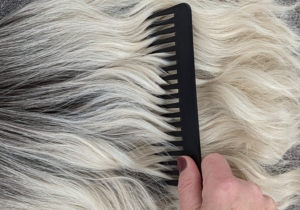
1. Detangle: Gently comb the wig from the ends upward using your wide-tooth comb.
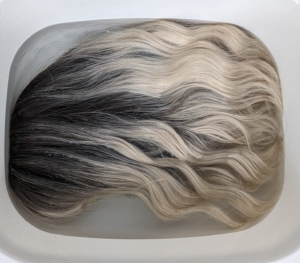
2. Soak: Mix a spoonful of shampoo into the lukewarm water, submerge the wig, and let it soak for 5 minutes.
Do not rub or scrub; instead, gently squeeze the wig.
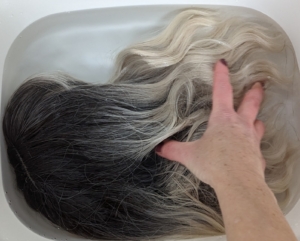
3. Rinse: Rinse thoroughly in clean, cold water until all soap residue is gone.
Note: never wring out water as this will cause damage.
Conditioning
leave-in conditioner
If you’re using a leave-in conditioner, proceed directly to Step 5 and 6
Condition: Apply rinse-out conditioner from mid-lengths to ends, avoiding the wig cap, then rinse with cold water.
Drying
5. Dry: Blot gently with your microfiber towel to remove excess water.
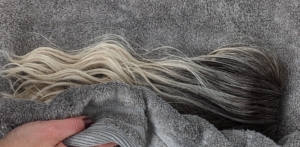
Air-dry on a wig stand. Alternatively, the wig can be left to dry lying flat on a towel.
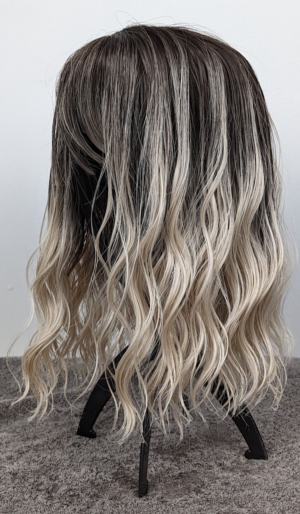
Applying Leave-In Conditioner
6. Spray directly onto the damp synthetic fibres and comb through, then leave to air-dry.
note: A leave-in conditioner can be sprayed onto the damp hair and combed through. This can be a convenient option as you don’t have to rinse the product out. It can also work wonders for de-tangling your wig between washes
If you have any questions you want to ask, please get in touch here